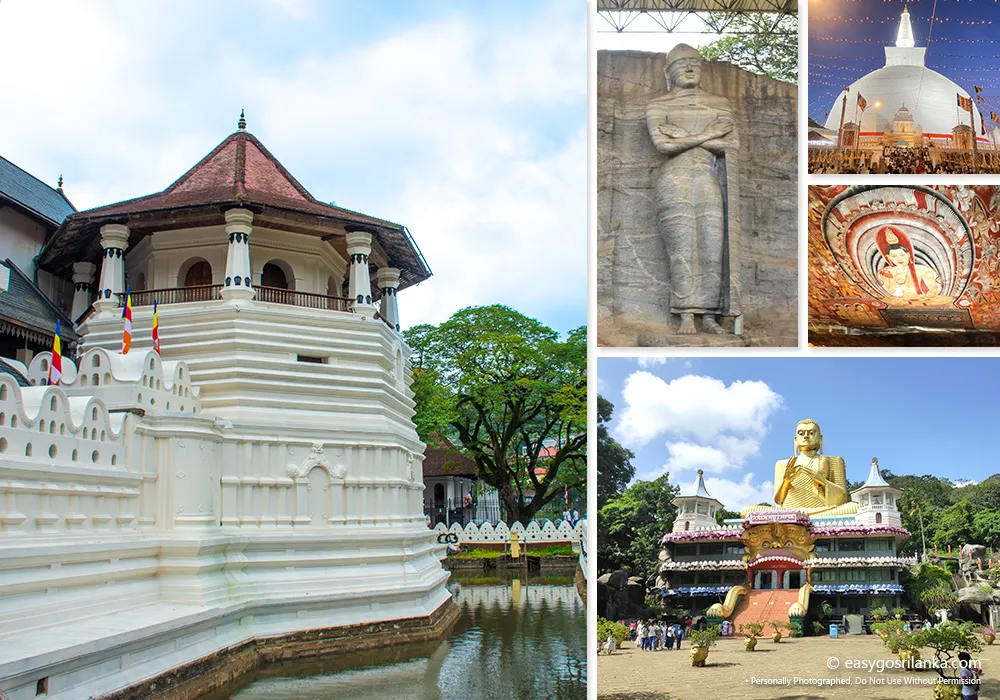
Quick Facts

Best For
Culture Lovers, History Enthusiasts & Families

Dress Code
Modest Clothing Required at Sacred Sites

Main Highlights
Temples, Stupas, Shrines, Art & Religious Traditions

Best Time
Morning or Late Afternoon
Overview
Buddhism has played a central role in Sri Lanka’s history and culture for more than two thousand years. Buddhist temples can be found throughout the island, ranging from ancient monastic complexes and rock temples to small village temples and active places of worship.
A Buddhist temple visit provides more than an opportunity to see beautiful architecture. These are living religious spaces where people come to pray, meditate, make offerings, observe religious ceremonies, and celebrate important Buddhist occasions.
Some temples are closely connected with major historical events and important figures in Sri Lankan Buddhism. Others are known for their architecture, ancient paintings, statues, sacred Bodhi trees, stupas, or peaceful natural surroundings.
Depending on your itinerary, you can visit ancient Buddhist sites in Anuradhapura and Polonnaruwa, cave temples around Dambulla, historic temples in Kandy, hilltop temples, or local village temples that offer a more intimate cultural experience.
Highlights
- Visit historic Buddhist temples across Sri Lanka.
- Discover ancient Buddhist architecture.
- See traditional Buddha statues and religious artwork.
- Visit sacred Bodhi trees.
- Explore ancient cave temples.
- See impressive stupas and dagobas.
- Learn about Sri Lankan Buddhist traditions.
- Observe local religious practices.
- Experience peaceful temple surroundings.
- Discover ancient murals and carvings.
- Meet an important part of Sri Lanka’s living culture.
- Combine temple visits with historical and cultural sightseeing.
Why You Should Experience Buddhist Temple Visits
Buddhist temples provide an important window into Sri Lanka’s history and everyday culture.
Many temples are centuries or even more than a thousand years old, while others continue traditions that have been passed from generation to generation.
Visiting these sites allows travelers to understand how Buddhism influenced Sri Lankan architecture, art, literature, kingship, education, and community life.
The experience can also be deeply peaceful. Away from busy tourist attractions, many temples offer quiet courtyards, gardens, forests, and meditation spaces.
For international visitors, a knowledgeable local guide can help explain Buddhist symbols, temple architecture, religious customs, and the significance of individual sites.
Best Buddhist Temples to Visit in Sri Lanka
Sri Lanka has thousands of Buddhist temples, so the best choices depend on your travel route.
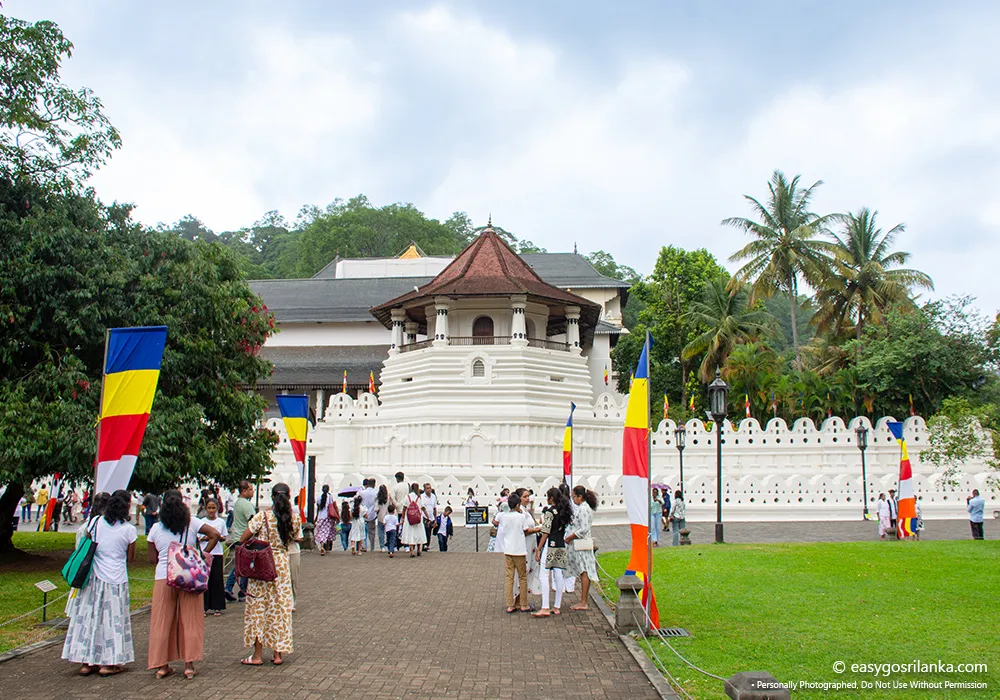
1. Temple of the Tooth – Kandy
The Sri Dalada Maligawa, commonly known as the Temple of the Tooth, is one of Sri Lanka’s most important Buddhist pilgrimage sites.
Located in Kandy, it houses the sacred Tooth Relic of the Buddha and plays a central role in Sri Lankan Buddhist traditions.
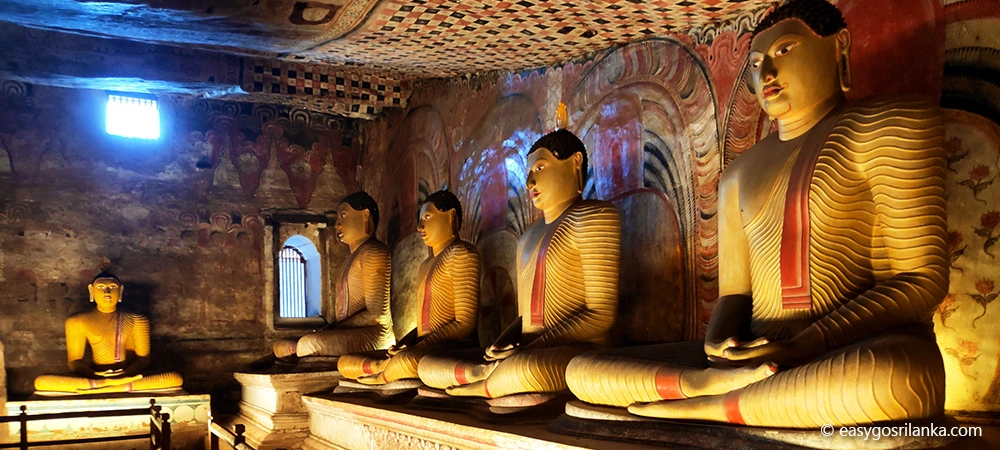
2. Dambulla Cave Temple
The Dambulla Cave Temple is one of Sri Lanka’s most remarkable religious and historical sites. Its cave shrines contain numerous Buddha images and traditional paintings.
The temple complex is also a UNESCO World Heritage Site.
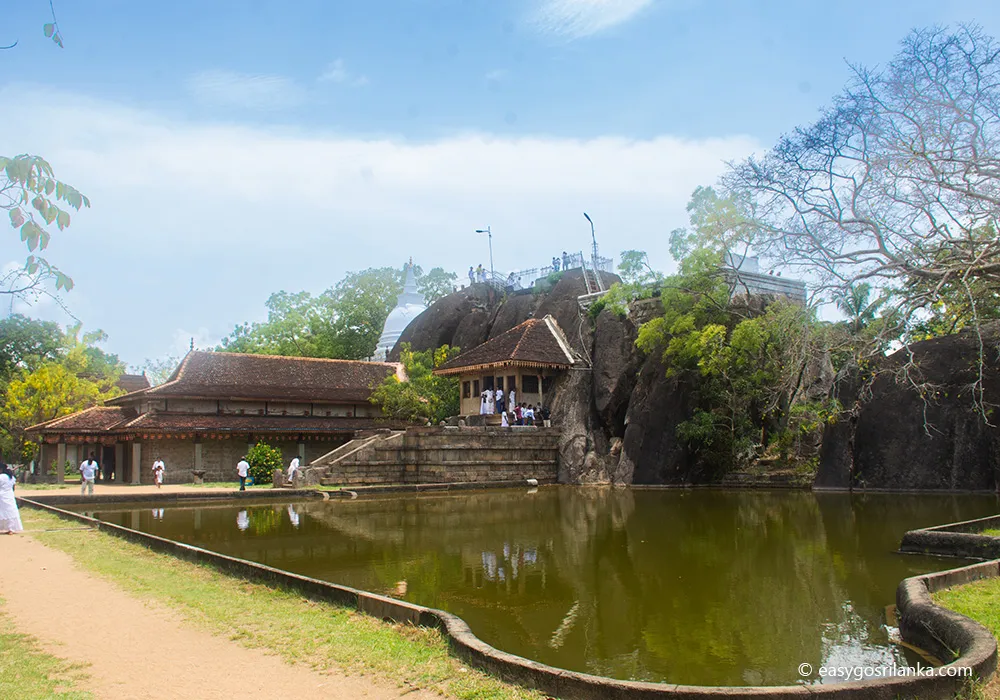
3. Isurumuniya Temple – Anuradhapura
Isurumuniya is an ancient rock temple known for its distinctive setting, archaeological remains, and historic sculptures.
It can easily be included in a wider Anuradhapura heritage tour.
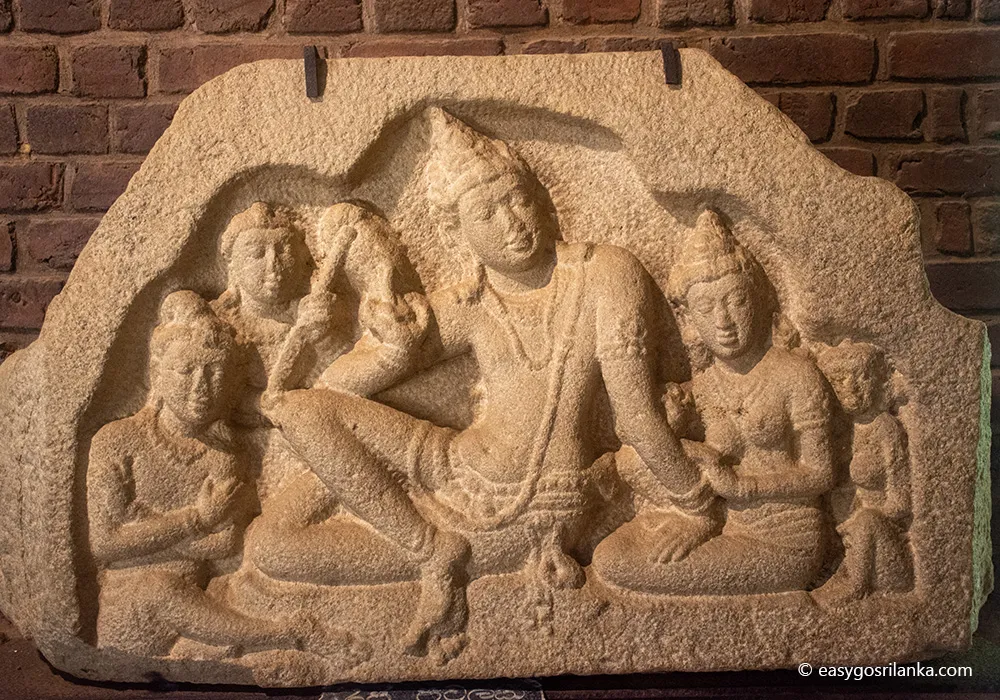
4. Abhayagiri Monastery – Anuradhapura
The Abhayagiri complex was once a major center of Buddhist learning and monastic life. Its extensive archaeological remains provide an insight into the scale of ancient Anuradhapura.
5. Ruwanwelisaya – Anuradhapura
Ruwanwelisaya is one of Sri Lanka’s most revered stupas. Its large white dome and surrounding elephant wall make it one of the most recognizable religious landmarks in the country.
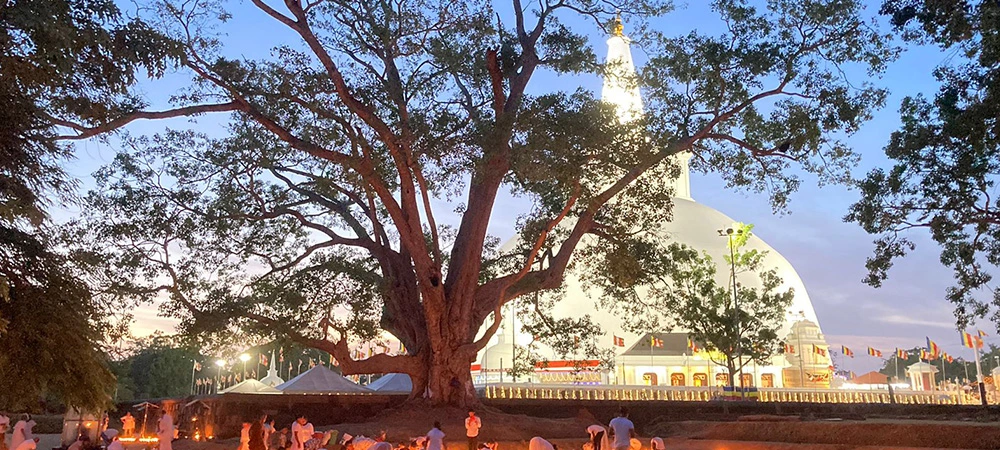
6. Jetavanaramaya – Anuradhapura
Jetavanaramaya is an enormous ancient brick stupa and one of the most impressive surviving monuments of ancient Anuradhapura.
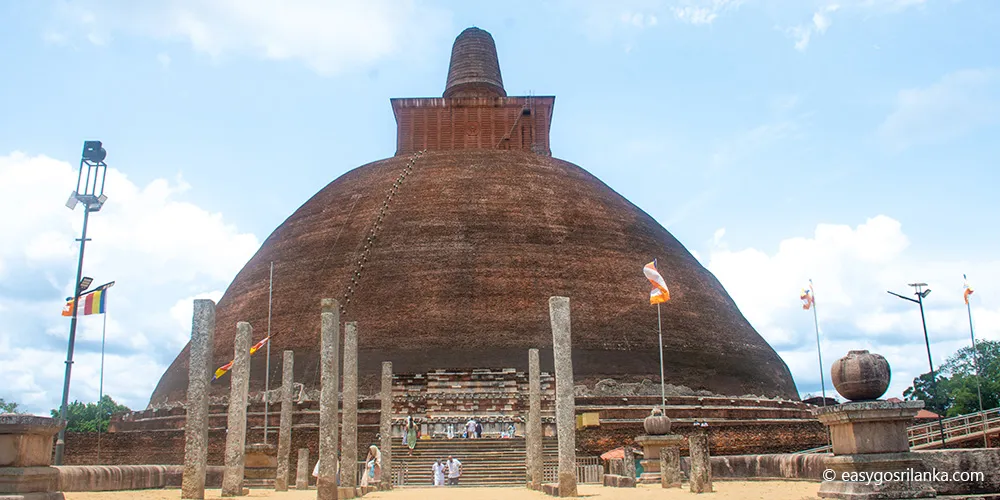
7. Gal Vihara – Polonnaruwa
Gal Vihara features monumental Buddha statues carved directly into a granite rock face and represents one of the finest achievements of ancient Sri Lankan Buddhist sculpture.
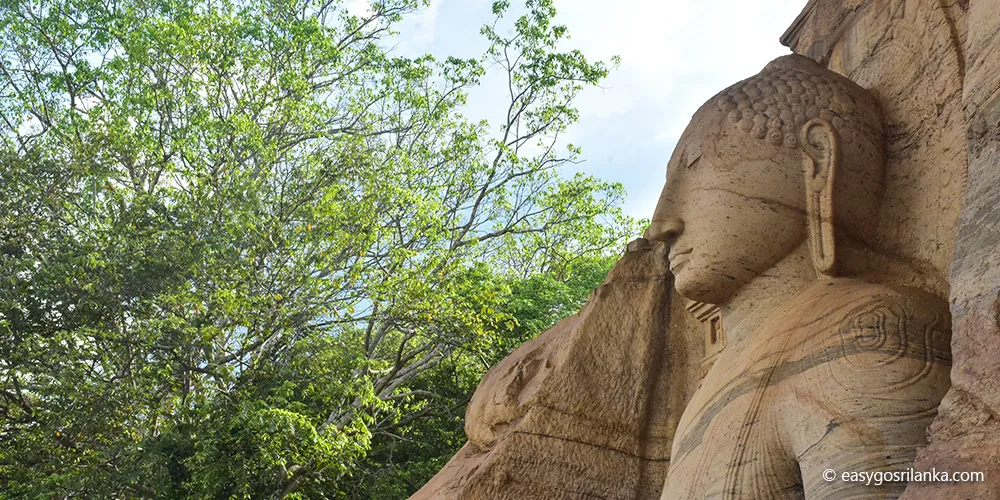
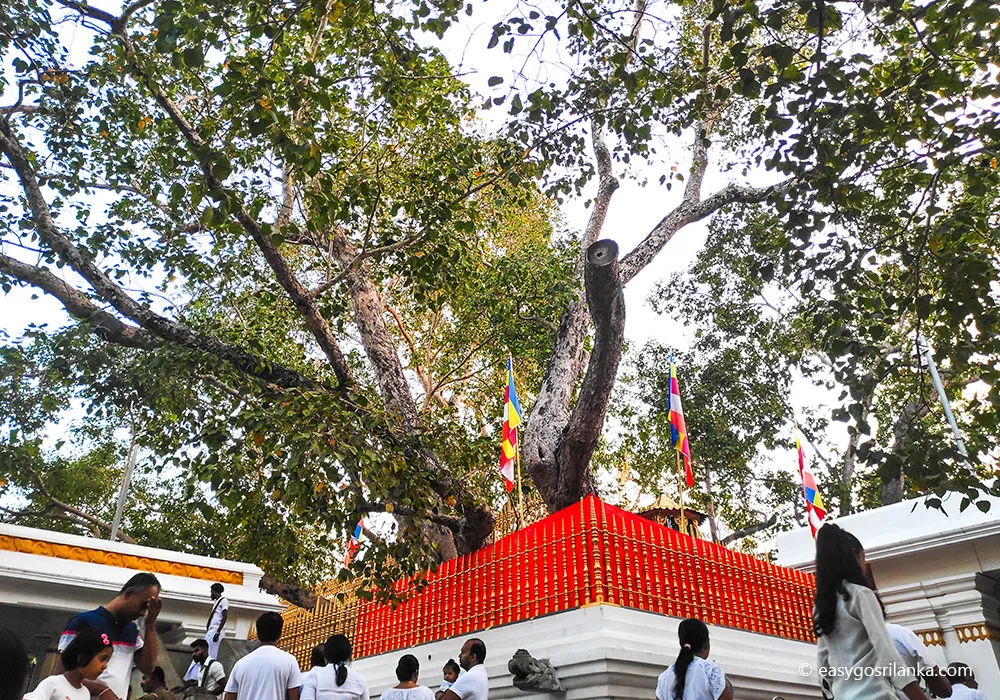
8. Sri Maha Bodhi – Anuradhapura
Sri Maha Bodhi is one of the most sacred Buddhist sites in Sri Lanka. It is traditionally associated with a sapling from the original Bodhi tree at Bodh Gaya in India.
Best Time to Visit
Buddhist temples can be visited throughout the year.
Morning
Morning is often an excellent time because temperatures are cooler and temples can have a peaceful atmosphere.
It may also provide opportunities to observe devotees making offerings and participating in religious activities.
Late Afternoon
Late afternoon can also be comfortable, particularly at temples where you want to spend time exploring the surrounding grounds.
Avoid the hottest part of the day when possible, especially at outdoor archaeological sites.
Religious Festivals
Major Buddhist festivals and full moon Poya days can make temples particularly active and atmospheric. However, expect larger crowds and increased pilgrimage activity during these periods.
What to Expect
A Buddhist temple visit can vary greatly depending on the location.
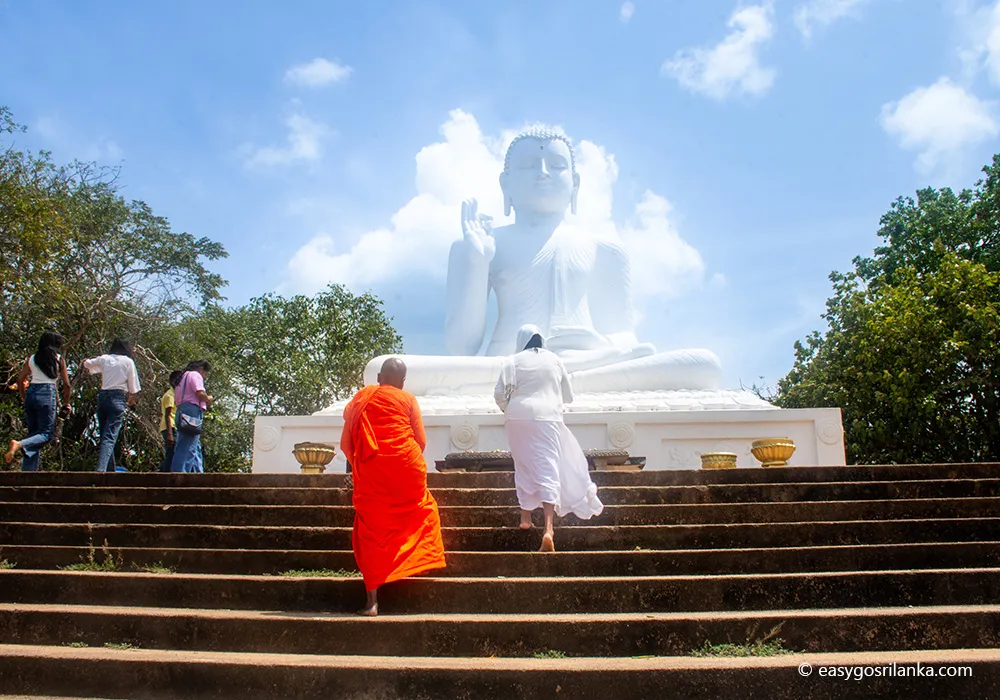
At an active temple, you may see devotees lighting oil lamps, offering flowers, praying, meditating, or making offerings to monks and sacred objects.
Historic temples may contain ancient statues, murals, stupas, Bodhi trees, stone carvings, inscriptions, and other archaeological features.
Some temples are located within caves or on hillsides, while others form part of large monastic complexes.
Your guide can explain the meaning of different architectural elements and Buddhist symbols, helping you understand what you are seeing rather than simply walking through the site.
Remember that these are living religious spaces. At some locations, you may encounter ceremonies or worshippers engaged in personal religious practices. Visitors should observe quietly and respectfully.
Difficulty & Suitability
Difficulty: Easy
Most Buddhist temple visits require only light walking. Some temples may involve stairs, slopes, or uneven surfaces.
Suitable For
- Families
- Couples
- Solo travelers
- Senior travelers
- History enthusiasts
- Culture lovers
- Photographers
- Spiritual travelers
- First-time visitors to Sri Lanka
Travelers with mobility limitations should check individual temple access before visiting, as some historic temples have stairs or uneven terrain.
What to Bring
- Comfortable walking shoes
- Modest clothing
- Shawl or light cover-up
- Hat or cap for outdoor areas
- Sunscreen
- Drinking water
- Camera
- Small bag
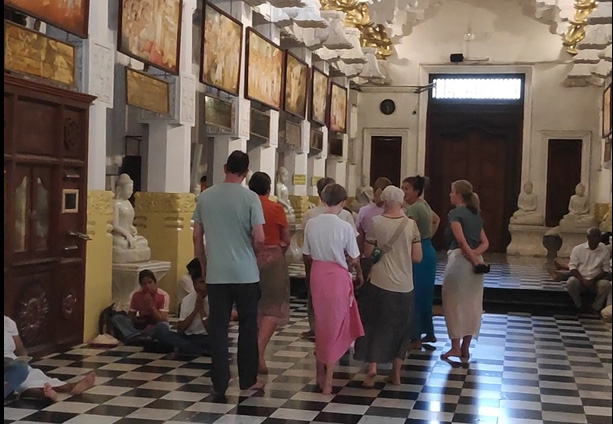
Wear clothing that covers the shoulders and knees. Shoes and hats may need to be removed at certain sacred areas.
Safety Tips
- Follow temple rules and instructions.
- Watch your step on uneven surfaces.
- Be careful on stairs and wet stone floors.
- Keep valuables secure.
- Stay hydrated in hot weather.
- Avoid touching statues or sacred objects.
- Do not enter restricted areas.
- Follow photography restrictions.
- Maintain appropriate behavior during religious ceremonies.
- Keep children supervised around sacred objects and crowded areas.
Temple Etiquette & Dress Code
Respectful behavior is particularly important when visiting Buddhist temples in Sri Lanka.
What to Wear
- Cover shoulders.
- Cover knees.
- Wear clean and modest clothing.
- Remove shoes and hats where required.
Temple Etiquette
- Speak quietly.
- Do not disturb people who are praying or meditating.
- Follow instructions from temple staff.
- Ask permission before photographing people.
- Follow restrictions on photography.
- Do not climb or sit on religious monuments.
- Do not touch Buddha statues.
- Avoid disrespectful poses near religious images.
When taking photographs, always consider the religious nature of the location rather than treating the temple simply as a photography backdrop.
Responsible Cultural Tourism
Buddhist temples are places of worship, not simply tourist attractions.
Responsible visitors should take time to understand local customs and behave appropriately.
Support temples and local communities by following entrance regulations, purchasing permitted local products, and using local guides where appropriate.
If you wish to make an offering, ask your guide or temple staff about the appropriate procedure rather than assuming what is acceptable.
Respecting local religious practices will make your visit more meaningful and help preserve Sri Lanka’s cultural heritage.
Travel Tips
- Research the temple before visiting.
- Dress appropriately from the beginning of your sightseeing day.
- Carry a lightweight shawl or cover-up.
- Wear footwear that is easy to remove.
- Visit early in the day when possible.
- Consider hiring a local guide for historic temples.
- Allow extra time during religious festivals and Poya days.
- Ask before photographing monks or worshippers.
- Follow signs regarding photography.
- Keep your voice low inside temple buildings.
- Combine temple visits with nearby cultural and historical attractions.
Related Destinations
Explore more destinations connected with Sri Lanka’s Buddhist heritage:
- Kandy
- Anuradhapura
- Polonnaruwa
- Dambulla
- Mihintale
- Sigiriya
- Kandy
- Colombo
- Kelaniya
Related Activities
Discover more cultural and heritage experiences:
- Hindu Temple Visits
- Dambulla Cave Temple Visit
- Temple of the Tooth Visit
- Anuradhapura Heritage Tour
- Polonnaruwa Cycling Tour
- Archaeological Tours
- Village Tour
- Cultural Dance Show
- Local Market Visits
- Sri Lankan Cooking Classes
Frequently Asked Questions (FAQ)
Many Buddhist temples welcome visitors, although they remain active religious sites. Some areas may have restrictions, and visitors should always follow local rules.
Wear modest clothing covering your shoulders and knees. You may also need to remove your shoes and hat at certain sacred areas.
Photography rules vary between temples. Always follow signs and instructions from temple staff, and avoid photographing restricted areas or people without permission.
Yes. Buddhist temples generally welcome respectful visitors regardless of their religious background.
You may see monks participating in religious activities or moving around the temple. Always behave respectfully and ask permission before photographing them.
Poya days are monthly Buddhist observance days associated with the full moon. Temples can become particularly busy with devotees and religious activities on these days.
The Temple of the Tooth in Kandy is one of the country’s most important Buddhist pilgrimage sites because it houses the sacred Tooth Relic of the Buddha. However, Sri Lanka has many other highly significant Buddhist sites.
Yes. Children can visit Buddhist temples, but parents should explain the importance of respectful behavior and supervise them around sacred objects and crowded areas.
Visitors may observe certain religious activities, but participation depends on the temple and ceremony. Always follow the guidance of temple staff or your local guide.
A typical visit may take between one and two hours, although major historical complexes such as Anuradhapura can require considerably more time.
Book This Experience
Discover Sri Lanka’s Living Buddhist Heritage
Step into Sri Lanka’s sacred temples, ancient monasteries, and peaceful religious sites while learning about the traditions that have shaped the island for more than two thousand years.
Explore Sri Lanka’s Buddhist heritage with Easy Go Sri Lanka and discover ancient temples, sacred sites, religious art, and living cultural traditions with a knowledgeable local guide.