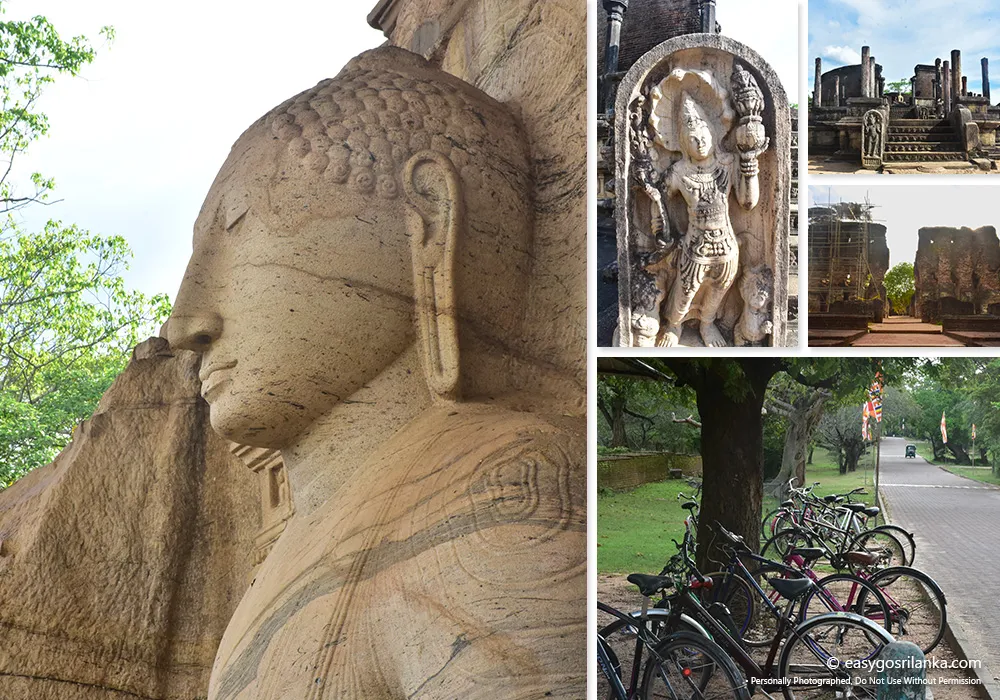
Quick Facts

Best For
History Lovers, Families, Photographers & Active Travelers

Difficulty
Easy to Moderate

Main Highlights
Ancient City, Quadrangle, Gal Vihara & Royal Palace

Best Time
Early Morning or
Late Afternoon
Overview
Polonnaruwa is one of Sri Lanka’s most important ancient cities and was the country’s medieval capital during the 11th to 13th centuries. Today, its extensive archaeological remains provide an impressive glimpse into the architecture, engineering, religion, and urban planning of medieval Sri Lanka. The ancient city is recognized as a UNESCO World Heritage Site.
Cycling is an excellent way to explore Polonnaruwa because the major archaeological sites are spread across a relatively compact area. Instead of traveling from one monument to another by vehicle, you can ride along the roads connecting the ruins and stop whenever you want to explore a temple, statue, stupa, or ancient structure.
The experience combines physical activity with cultural exploration. You can cycle beneath trees, pass through quiet archaeological areas, and discover important landmarks including the Royal Palace complex, the Sacred Quadrangle, Vatadage, Rankoth Vehera, Lankatilaka, and the famous Gal Vihara.
Polonnaruwa’s ancient irrigation system is another important part of its history. The enormous Parakrama Samudra reservoir, associated with King Parakramabahu I, remains an impressive reminder of the engineering achievements of the ancient kingdom.
Highlights of Polonnaruwa
- Explore the ancient city of Polonnaruwa by bicycle.
- Ride between historic temples, palaces, and stupas.
- Visit the impressive Sacred Quadrangle.
- See the beautifully carved Buddha statues at Gal Vihara.
- Discover the Royal Palace and ancient royal complex.
- Visit the circular Vatadage shrine.
- See the massive Rankoth Vehera stupa.
- Explore the impressive Lankatilaka image house.
- Cycle through peaceful archaeological landscapes.
- Learn about Sri Lanka’s medieval history and culture.
- Experience the ancient city at your own pace.
- Enjoy opportunities for photography along the route.
Why You Should Experience a Polonnaruwa Cycling Tour
Polonnaruwa is not simply a collection of individual monuments. The archaeological area represents an entire ancient city, with religious buildings, royal structures, monasteries, reservoirs, and other remains distributed across the landscape.
Cycling allows you to experience this historic environment more naturally than simply traveling between attractions by vehicle.
The relatively flat terrain makes cycling accessible to many active travelers, while the freedom to stop at different sites allows you to explore according to your own interests.
It is also an excellent option for travelers who want to combine sightseeing with light physical activity.
For photographers, cycling provides additional flexibility. You can stop to photograph ancient stone carvings, Buddhist statues, brick structures, tree-lined roads, and the surrounding landscape without following a strict vehicle-based itinerary.
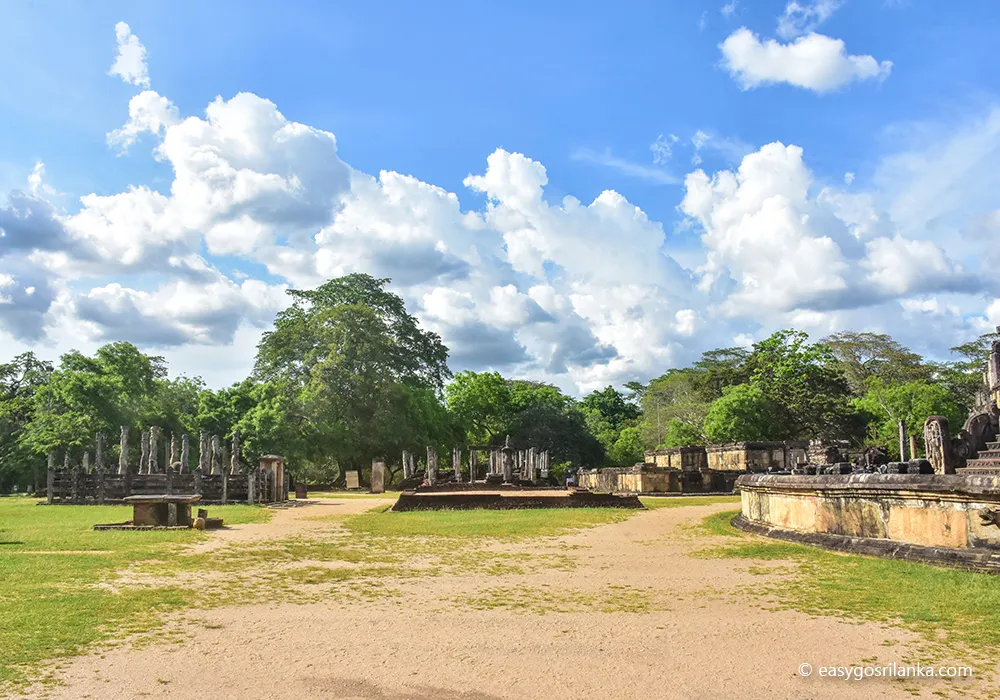
Best Places to Visit During the Cycling Tour
1. Royal Palace Complex
The Royal Palace area provides an introduction to the scale and sophistication of medieval Polonnaruwa. The remaining structures give visitors an impression of the city’s former royal center.
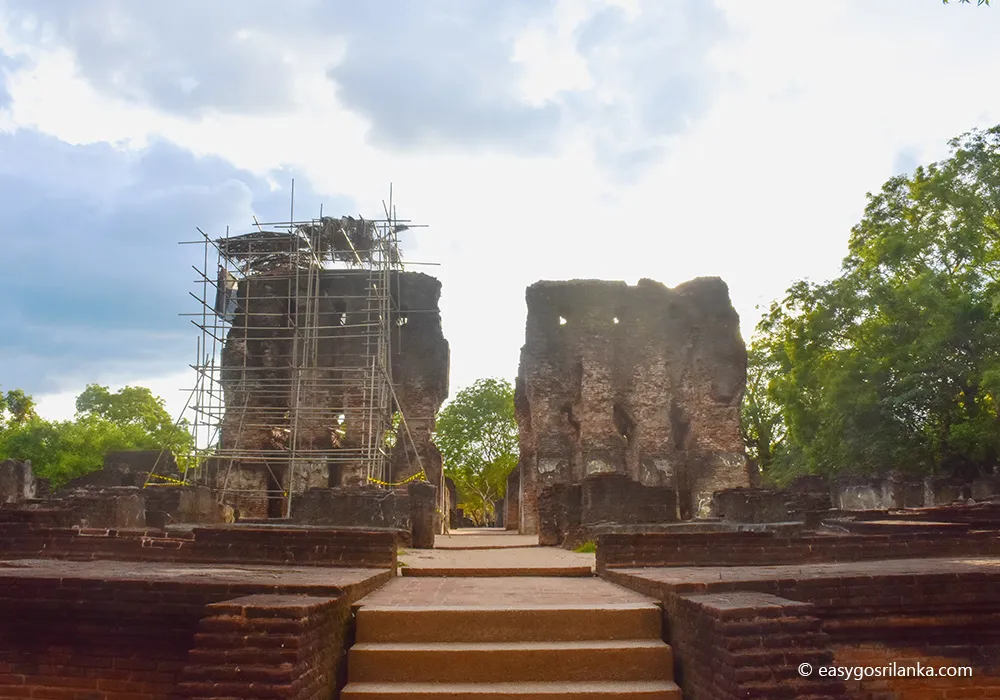
2. Sacred Quadrangle
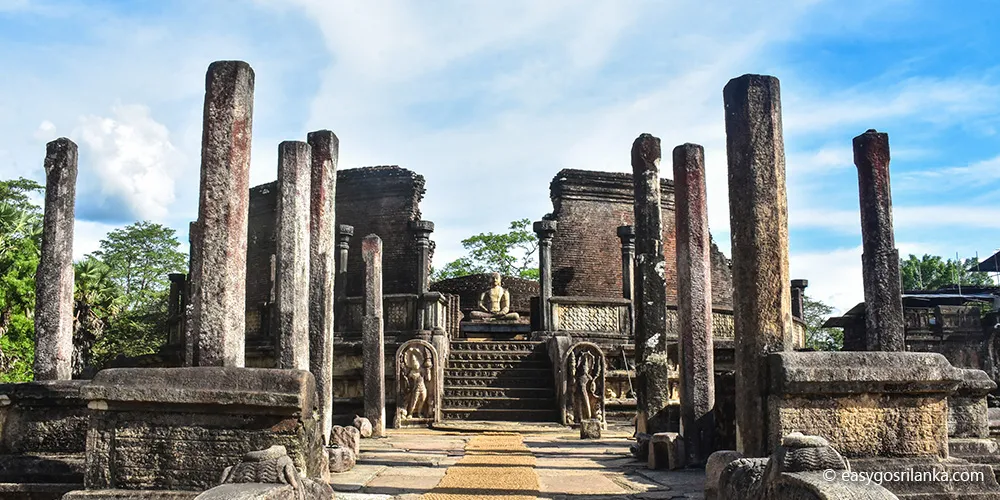
The Sacred Quadrangle is one of the most impressive sections of the ancient city. It contains several important religious structures, including the famous Vatadage.
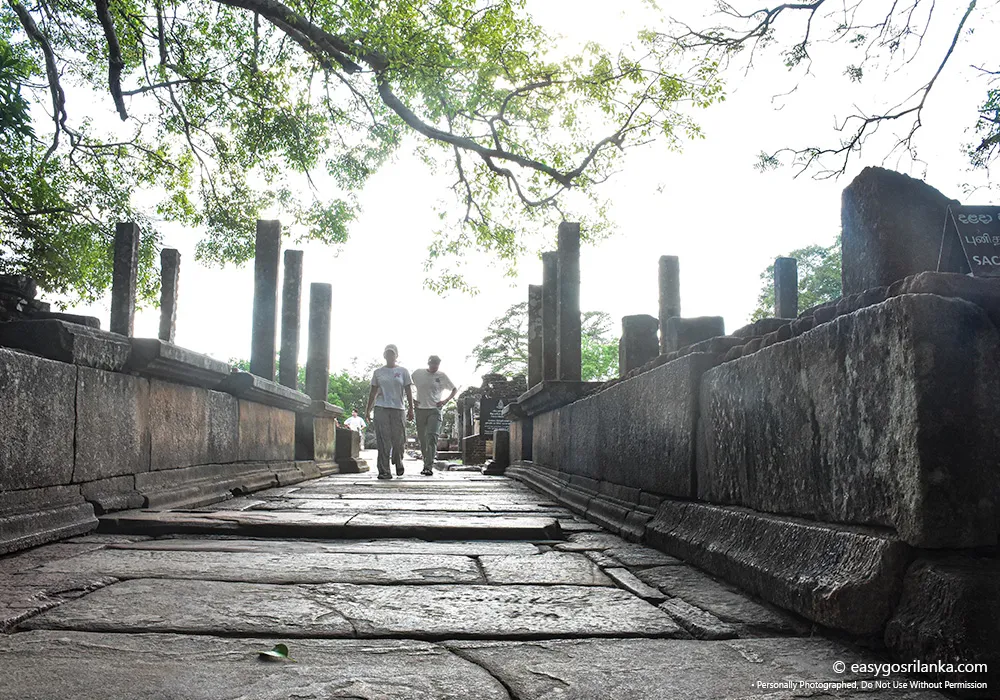
3. Vatadage
The Vatadage is a beautifully preserved circular shrine featuring intricate stonework and carved architectural details. It is one of the most recognizable monuments in Polonnaruwa.
4. Gal Vihara
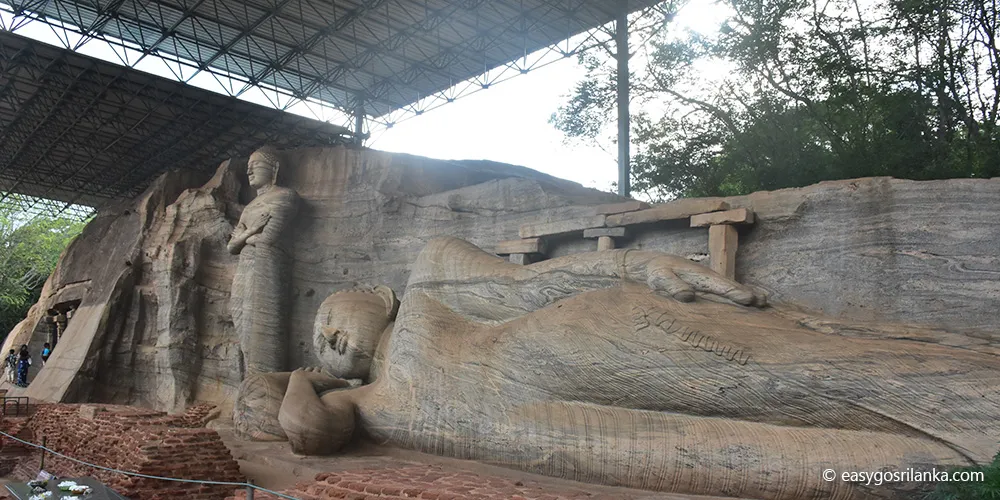
Gal Vihara is one of the highlights of any Polonnaruwa visit. The site features several monumental Buddha images carved directly into a granite rock face and is regarded as one of the outstanding achievements of Sri Lankan Buddhist art.
5. Lankatilaka
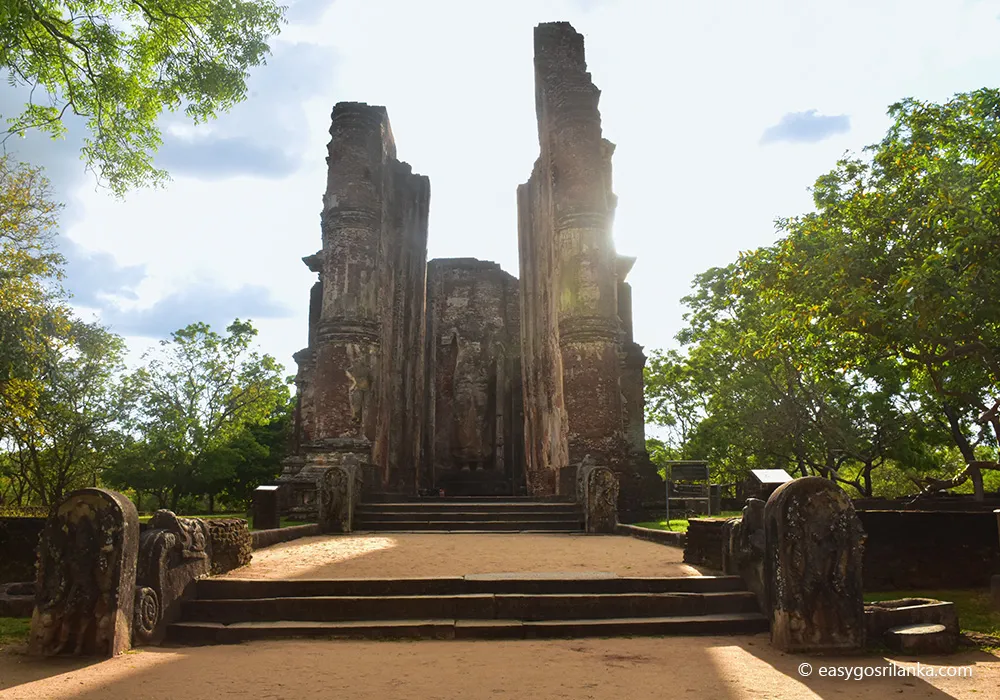
Lankatilaka is an impressive brick image house featuring a large standing Buddha image and monumental architectural remains.
6. Rankoth Vehera
Rankoth Vehera is one of the largest stupas in Polonnaruwa and is an important feature of the ancient city’s religious landscape.
7. Parakrama Samudra
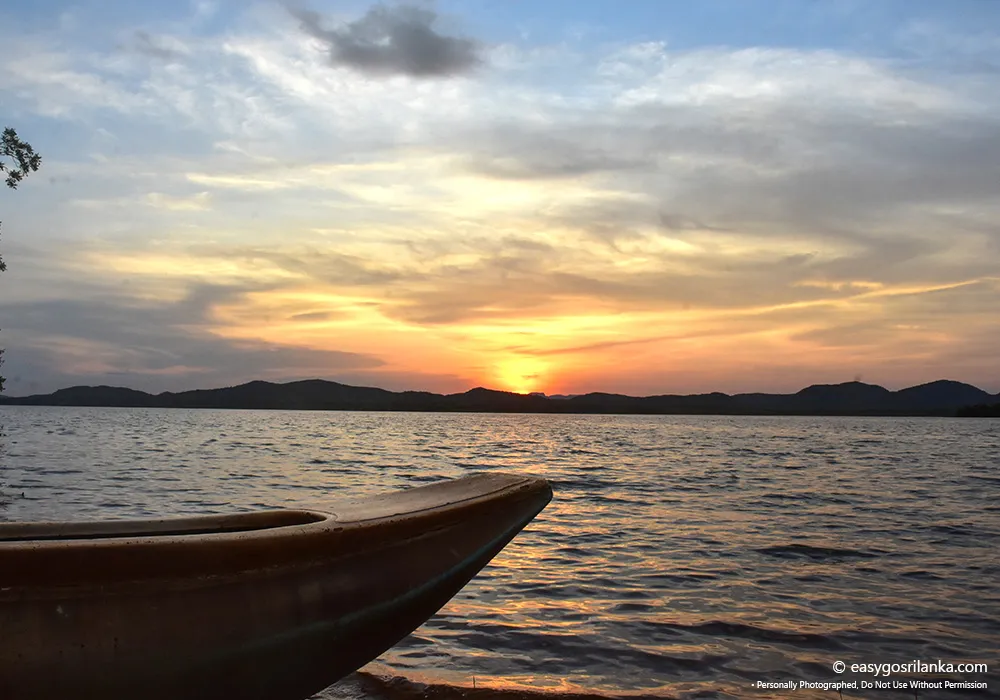
The enormous Parakrama Samudra reservoir is closely connected with Polonnaruwa’s history and demonstrates the importance of sophisticated irrigation to the medieval kingdom.
Best Time to Visit
The best time for a Polonnaruwa Cycling Tour is generally early morning or late afternoon.
The dry-zone climate can become very hot during the middle of the day. Starting early is particularly recommended if you plan to explore the main archaeological area by bicycle.
Early Morning
- Cooler temperatures
- More comfortable cycling
- Softer natural light
- Fewer visitors
- Better conditions for photography
Late Afternoon
- Cooler conditions than midday
- Warm evening light
- Pleasant atmosphere around the ruins
- Good opportunities for photography
What to Expect
Your cycling experience typically begins near the entrance to the ancient city, where you can arrange a bicycle and prepare for the ride.
From there, you will follow roads and paths connecting the major archaeological areas. The route can be adapted depending on your available time, fitness level, and interests.
You may begin with the Royal Palace area before continuing toward the Sacred Quadrangle and its remarkable collection of monuments.
As you cycle through the ancient city, you will encounter brick structures, stone carvings, stupas, temples, ancient ponds, walls, and remnants of the medieval urban landscape.
One of the major highlights is Gal Vihara, where enormous Buddha figures were carved directly into a granite rock face.
The experience is not a race. The best way to enjoy Polonnaruwa is to cycle slowly, stop regularly, explore the monuments, and take time to appreciate the details.
A knowledgeable local guide can add significant value by explaining the history, religious symbolism, architecture, and stories associated with the ruins.
Difficulty & Suitability
Difficulty: Easy to Moderate
Most of the cycling is on relatively flat terrain, but the heat and distance can make the experience tiring, particularly during the middle of the day.
Suitable For
- Families with older children
- Couples
- Solo travelers
- History enthusiasts
- Active travelers
- Photographers
- Culture lovers
- First-time visitors to Polonnaruwa
Considerations
You should be comfortable riding a bicycle for several hours. Travelers who are not confident cyclists can explore the archaeological area by tuk-tuk or vehicle instead.
What to Bring
- Comfortable clothing
- Comfortable shoes
- Hat or cap
- Sunglasses
- Sunscreen
- Reusable water bottle
- Small backpack
- Camera
- Binoculars if interested in birds
- Light snacks
- Comfortable cycling clothing
Bring plenty of water, particularly during hot and sunny conditions.
Safety Tips
- Wear a helmet whenever available and appropriate.
- Ride at a comfortable speed.
- Be careful on uneven roads and archaeological paths.
- Watch for pedestrians and other cyclists.
- Avoid cycling too close to wildlife.
- Stay on permitted roads and paths.
- Do not climb on ancient structures.
- Do not touch or damage archaeological remains.
- Be particularly careful around sacred monuments.
- Follow instructions from site staff.
- Keep valuables secure.
- Stay hydrated throughout the ride.
Respecting the Ancient City
Polonnaruwa is both an archaeological site and a place of religious importance. Visitors should treat the monuments and surrounding environment with respect.
When visiting Buddhist monuments:
- Dress respectfully.
- Remove shoes where required.
- Do not pose disrespectfully near Buddha statues.
- Avoid touching religious statues or carvings.
- Follow photography restrictions where applicable.
- Keep voices low around sacred areas.
The current heritage-site guidance emphasizes respecting special rules and traditions at sacred archaeological sites.
Travel Tips
- Start early to avoid the strongest midday heat.
- Allow at least half a day if you want to explore the main archaeological attractions without rushing.
- Carry enough drinking water.
- Choose a bicycle that fits comfortably and has properly working brakes.
- Consider hiring a guide if you want deeper historical context.
- Wear sun protection even on cloudy days.
- Keep your camera protected from dust and heat.
- Take regular breaks.
- Avoid touching ancient carvings and structures.
- Check current site access and ticket information before your visit.
The Central Cultural Fund currently lists Polonnaruwa as open from 7:00 AM to 5:00 PM, with online ticketing available. Opening arrangements and ticket policies can change, so travelers should verify current information before visiting.
Related Destinations
Explore more destinations in Sri Lanka’s Cultural Triangle:
- Sigiriya
- Dambulla
- Anuradhapura
- Minneriya
- Habarana
- Ritigala
- Kandy
- Pidurangala
Related Activities
Discover more cultural and active experiences:
- Anuradhapura Heritage Tour
- Climb Sigiriya Rock
- Climb Pidurangala Rock
- Village Tour
- Archaeological Tours
- Buddhist Temple Visits
- Hindu Temple Visits
- Elephant Gathering in Minneriya
- Bird Watching
- Scenic Photography Tours
- Local Market Visits
Frequently Asked Questions (FAQ)
Yes. Cycling is one of the most enjoyable ways to move between the ancient city’s archaeological sites because the major monuments are spread across a relatively compact area.
A typical cycling experience can take around 3–5 hours, depending on the route, cycling speed, number of stops, and time spent exploring the monuments.
The route is generally easy to moderate. The terrain is mostly flat, but the heat and length of the ride can make the experience tiring.
Major highlights include the Royal Palace complex, Sacred Quadrangle, Vatadage, Rankoth Vehera, Lankatilaka, and Gal Vihara.
Yes. Older children who are comfortable riding a bicycle can enjoy the experience. Parents should consider the heat, cycling distance, and availability of suitable bicycles.
Yes. Bicycle rental services are available around Polonnaruwa and near the archaeological area. Availability, bicycle quality, and rental conditions can vary.
A guide is not essential for cycling between the main sites, but a knowledgeable guide can significantly improve the experience by explaining the history and significance of the monuments.
Wear lightweight, comfortable clothing for cycling, but ensure your shoulders and knees are appropriately covered when visiting sacred Buddhist monuments.
Yes. The ancient city offers excellent opportunities for architectural, cultural, landscape, and wildlife photography.
Yes. Polonnaruwa works particularly well with Sigiriya, Dambulla, Minneriya, Habarana, and Anuradhapura as part of a Cultural Triangle itinerary.
Book This Experience
Cycle Through Sri Lanka’s Ancient Kingdom
Ride through the remarkable ruins of Polonnaruwa and discover royal palaces, ancient temples, stupas, sacred monuments, and the extraordinary stone carvings of Gal Vihara.
Explore Polonnaruwa by bicycle with Easy Go Sri Lanka and experience the history, culture, and landscapes of Sri Lanka’s ancient kingdom at your own pace.