Exploring the Ancient City of Polonnaruwa
| Reading Time: 7 MinDiscover the remarkable history of Sri Lanka at Polonnaruwa, an ancient royal capital where impressive stone carvings, sacred temples, and palace ruins tell stories of a powerful medieval kingdom. Located in the island’s North Central Province, Polonnaruwa is one of Sri Lanka’s most important archaeological destinations and a UNESCO World Heritage Site. Once a flourishing center of political power, religion, and agriculture, the city preserves extraordinary evidence of ancient Sri Lankan engineering and architecture. Today, visitors can explore its historic monuments by bicycle, on foot, or with a private guide. Whether you are passionate about history, photography, or cultural travel, exploring Polonnaruwa offers a fascinating glimpse into Sri Lanka’s rich heritage.
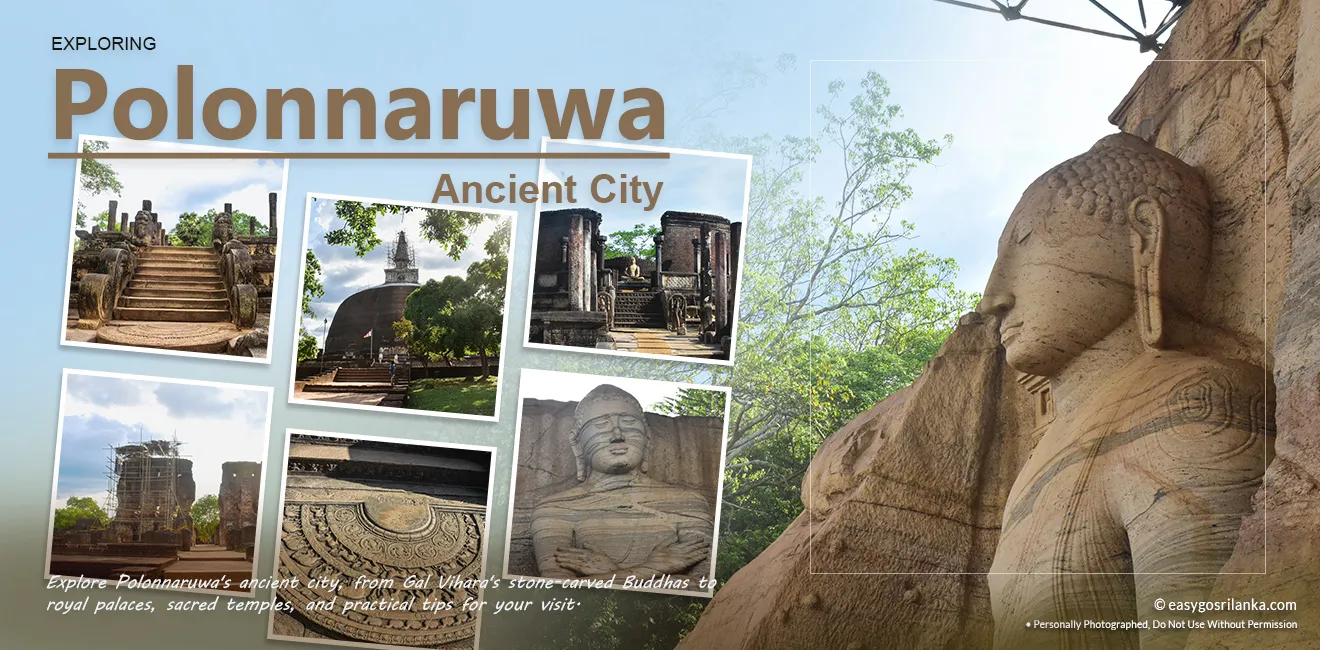
A Brief History of Polonnaruwa
Polonnaruwa became Sri Lanka’s second major capital after Anuradhapura declined as the island’s political center. The city reached a period of great prosperity during the reign of King Parakramabahu I in the 12th century.
Its rulers developed monasteries, temples, royal buildings, and sophisticated irrigation systems that supported agriculture across the surrounding dry zone. One of the most impressive achievements was Parakrama Samudra, an enormous reservoir that continues to shape the landscape.
Polonnaruwa eventually declined as political power shifted elsewhere, leaving behind an extensive archaeological complex. Its ruins are now among the best places in Sri Lanka to appreciate the achievements of the island’s medieval civilization.
Best Places to Explore in Polonnaruwa
1. Gal Vihara: Remarkable Rock-Cut Buddha Statues
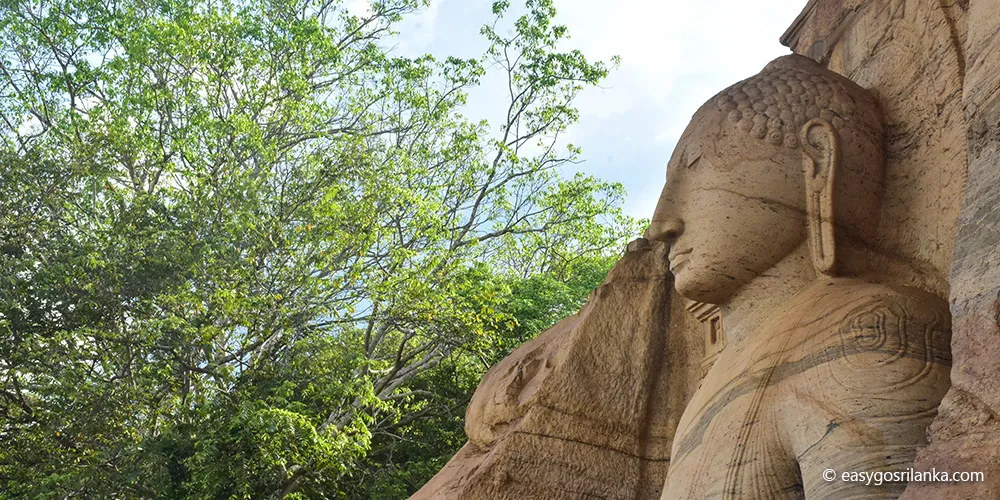
Gal Vihara is one of the most celebrated attractions in Polonnaruwa. This rock shrine features a remarkable group of Buddha statues carved into a large granite rock face.
The sculptures include seated and reclining figures, as well as a standing figure whose posture has attracted different interpretations. Their scale, smooth surfaces, and expressive details demonstrate the skill of ancient Sri Lankan sculptors.
Take time to observe the carvings closely and appreciate the peaceful atmosphere of the site.
Travel tip: Dress modestly and follow local rules for footwear, photography, and respectful behavior around the statues.
2. The Royal Palace of King Parakramabahu
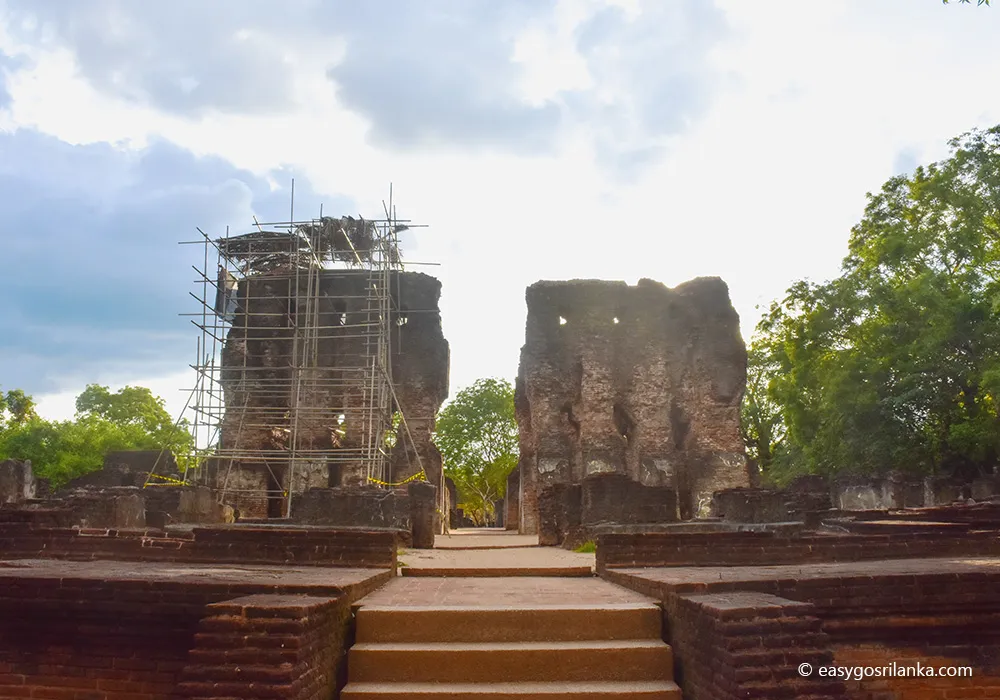
The remains of the Royal Palace offer a glimpse into the former grandeur of Polonnaruwa’s royal court. The complex is traditionally associated with King Parakramabahu I and once contained a substantial multistory palace structure.
Today, visitors can see the surviving brick walls, foundations, and architectural remains that hint at the building’s original scale.
Nearby ruins help illustrate how the ancient capital was organized around royal administration and ceremonial spaces.
3. The Sacred Quadrangle
The Sacred Quadrangle is one of the most architecturally impressive sections of the ancient city. This compact area contains several religious structures with distinctive designs and intricate stonework.
Highlights include:
- Vatadage: A circular relic shrine known for its carved stone terraces, steps, and guardstones.
- Hatadage: A historic shrine traditionally associated with the Sacred Tooth Relic.
- Gal Potha: A large stone inscription offering insight into royal authority and historical records.
- Nissanka Lata Mandapaya: A distinctive structure featuring elegant stone pillars shaped like lotus stems.
Allow time to explore the different monuments rather than viewing the area as a single stop.
4. Rankoth Vehera
Rankoth Vehera is one of Polonnaruwa’s most impressive stupas. Its large brick dome and traditional architectural form reflect the importance of Buddhist religious construction during the medieval period.
The stupa stands within a broader archaeological landscape, making it a worthwhile stop for visitors interested in ancient architecture and Buddhist heritage.
Walk around the monument where permitted and appreciate its scale from different viewpoints.
5. Lankatilaka Image House
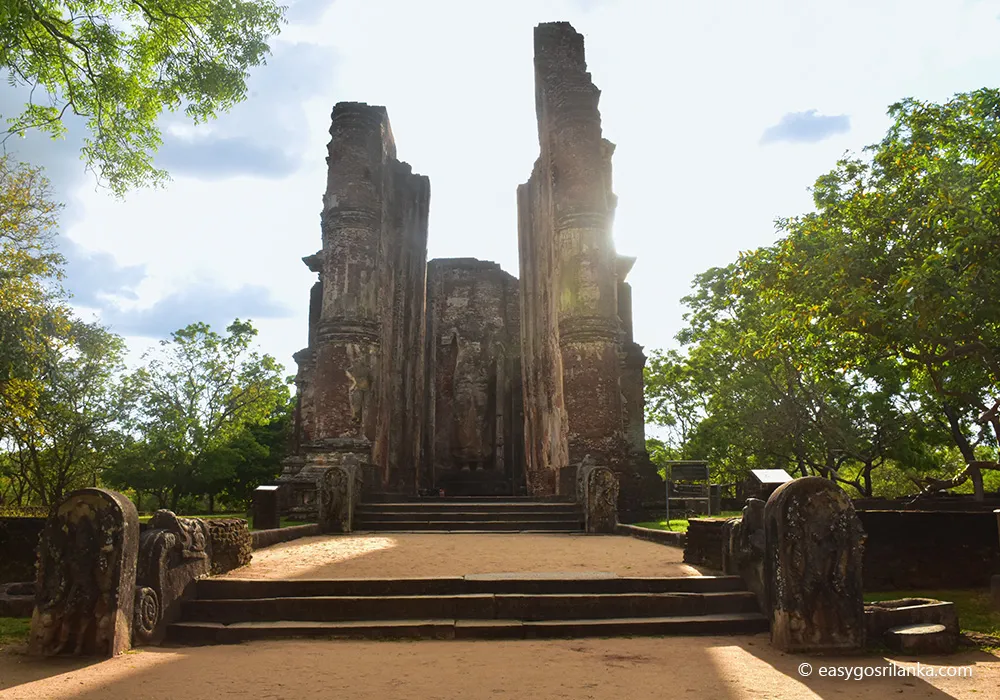
Lankatilaka is a striking brick-built religious structure known for its tall walls and monumental standing Buddha image. Although parts of the building have deteriorated over time, its remaining architecture conveys the impressive scale of medieval religious construction.
The site provides a useful contrast to the stone-carved sculptures at Gal Vihara and demonstrates the variety of building techniques used in ancient Polonnaruwa.
6. Parakrama Samudra
Parakrama Samudra, often translated as the Sea of Parakrama, is an extensive ancient irrigation reservoir associated with King Parakramabahu I.
The reservoir reflects the importance of water management in the development of Sri Lanka’s dry-zone kingdoms. Its broad waters and surrounding landscape also provide a scenic break from exploring the archaeological ruins.
Visit during the early morning or late afternoon for pleasant light and opportunities to photograph the landscape.
7. The Lotus Pond
The Lotus Pond is a distinctive ancient stone bathing structure with a tiered design resembling the petals of a lotus flower.
Its unusual architecture makes it a favorite stop for travelers interested in ancient engineering and photography. Although smaller than the city’s major monuments, it demonstrates the attention to detail found throughout Polonnaruwa’s archaeological remains.
8. Shiva Devale
Polonnaruwa contains historic Hindu temples as well as Buddhist monuments. Shiva Devale No. 2 is among the notable surviving Hindu structures, reflecting the religious and cultural influences present during the Chola period and later medieval history.
Visiting this temple provides a broader understanding of the different traditions that shaped the ancient city.
How to Explore Polonnaruwa Ancient City
The archaeological area is extensive, so choosing the right way to explore it can make your visit more enjoyable.
- By bicycle: Cycling is a popular option for independent travelers. It lets you move between many of the major ruins at your own pace.
- By private vehicle: A private car with a driver is convenient for families, older travelers, and visitors who prefer to avoid cycling in the heat.
- By tuk-tuk: A local tuk-tuk can help you reach multiple sites without having to walk the entire route.
- With a local guide: A knowledgeable guide can explain the historical significance of the monuments, inscriptions, and architectural details that might otherwise be overlooked.
Best Time to Visit Polonnaruwa
Polonnaruwa has a tropical dry-zone climate, and sightseeing can become hot during the middle of the day. The drier months are often more comfortable for exploring the ruins, although conditions vary throughout the year.
Start early in the morning to enjoy cooler temperatures and quieter paths. If you plan to visit several monuments, schedule breaks for water and shade.
Rain can make some surfaces slippery, so take care when walking around stone steps and uneven archaeological paths.
What to Wear and Bring
Prepare for warm weather and visits to sacred places.
- Lightweight, breathable clothing.
- Clothing that covers your shoulders and knees for religious sites.
- Comfortable walking shoes or sandals that are easy to remove where required.
- Drinking water, sunscreen, sunglasses, and a hat.
- A camera or smartphone for photographs.
- Some cash for local services and small purchases.
Avoid climbing on ancient structures, touching fragile carvings unnecessarily, or leaving litter at the site.
Explore Sri Lanka’s Ancient Heritage with Easy Go Sri Lanka
Polonnaruwa brings Sri Lanka’s past to life through its monumental stupas, royal ruins, intricate stone carvings, and remarkable irrigation heritage. Whether you explore by bicycle or with a private guide, the ancient city offers an unforgettable cultural experience.
With Easy Go Sri Lanka, you can include Polonnaruwa in a tailor-made journey through the Cultural Triangle, combining ancient cities with destinations such as Sigiriya, Dambulla, and Anuradhapura.
Explore our Sri Lanka tour itineraries or contact Easy Go Sri Lanka to plan a private cultural tour that suits your interests and schedule.
→ Explore Our Sri Lanka Tours
→ Plan a Tailor-Made Sri Lanka Journey
→ Contact Easy Go Sri Lanka
Frequently Asked Questions
Allow at least half a day for the main highlights. A full day is preferable if you want to explore the major monuments at a relaxed pace, take photographs, and learn about the city’s history.
Yes. Cycling is a popular way to travel between many of the archaeological sites. However, consider the heat, distances, and your fitness level before choosing this option.
Yes. The Ancient City of Polonnaruwa was inscribed on the UNESCO World Heritage List in 1982.
Yes. Both destinations are commonly included in Sri Lanka’s Cultural Triangle itineraries. Depending on your starting point and available time, you may visit them on separate days or combine them within a wider tour.
Both are major ancient capitals of Sri Lanka. Anuradhapura is especially known for its sacred Buddhist sites and monumental stupas, while Polonnaruwa is celebrated for its medieval palace ruins, compact archaeological complexes, and exceptional rock sculptures.