Quick Facts

Best For
Families, Nature Lovers, Wildlife Enthusiasts & Photographers

Location
Southern & Southwestern Coastal Sri Lanka

Common Species
Green Turtle, Olive Ridley, Hawksbill, Loggerhead & Leatherback

Best Time
Year-Round
Overview
Sri Lanka is an important nesting and feeding ground for several species of marine turtles. The island’s coastline provides beaches where sea turtles come ashore to lay eggs, while surrounding marine habitats provide feeding grounds for turtles during different stages of their lives.
A turtle conservation visit allows travelers to learn more about these remarkable marine reptiles and the challenges they face. Depending on the organization and location, visitors may learn about turtle nesting, egg protection, hatchling releases, rescue and rehabilitation, and broader marine conservation efforts.
Several turtle conservation centers and community-based projects operate along Sri Lanka’s southern and southwestern coast. Responsible facilities focus on education, rehabilitation, and reducing threats to turtles rather than simply providing visitors with an opportunity to handle animals.
A conservation visit can therefore be much more than a typical tourist attraction. It provides an opportunity to understand Sri Lanka’s marine environment and the importance of protecting wildlife for future generations.
Highlights
- Learn about Sri Lanka’s marine turtle species.
- Discover how sea turtle conservation works.
- Learn about nesting and egg protection.
- Understand the threats facing sea turtles.
- See conservation and rehabilitation facilities.
- Learn about the life cycle of sea turtles.
- Support responsible wildlife conservation.
- Enjoy an educational experience for the whole family.
- Combine the visit with Sri Lanka’s beautiful southern coastline.
Why You Should Experience Turtle Conservation
Sea turtles have existed for millions of years, but modern threats such as habitat loss, fishing activity, marine pollution, plastic waste, and disturbance of nesting beaches create significant challenges for their survival.
A responsible conservation visit helps travelers understand these challenges while learning about practical conservation efforts.
For families, the experience can be particularly educational because children can learn about marine ecosystems and wildlife protection in an engaging environment.
For nature lovers and photographers, it also provides an opportunity to understand the behavior and conservation needs of sea turtles rather than simply viewing them as tourist attractions.
Most importantly, visitors can support conservation-focused tourism by choosing organizations that prioritize animal welfare, education, rehabilitation, and habitat protection.

Best Places for Turtle Conservation Experiences in Sri Lanka
Kosgoda
Kosgoda, on Sri Lanka’s southwest coast, is one of the country’s best-known areas for turtle conservation activities. The coastal region is associated with sea turtle nesting and several conservation initiatives.
Bentota & Surrounding Coast
The Bentota area provides convenient access to the southwestern coastline and can be combined with other beach and nature experiences.
Hikkaduwa
Hikkaduwa is another popular coastal destination where travelers can learn about marine life and sea turtle conservation. The surrounding marine environment is also important for observing coastal wildlife.
Southern Coast
Several coastal communities along the southern coast are involved in marine and turtle conservation initiatives. Experiences vary by organization, so travelers should research the conservation practices of individual centers before visiting.
Best Time to Visit
Turtle conservation experiences can generally be enjoyed throughout the year.
Best Time of Day
Morning
Morning visits are often comfortable because temperatures are lower and facilities may be less crowded.
Late Afternoon
Late afternoon can also be pleasant, particularly when combining the experience with other coastal activities.
Turtle Nesting Season
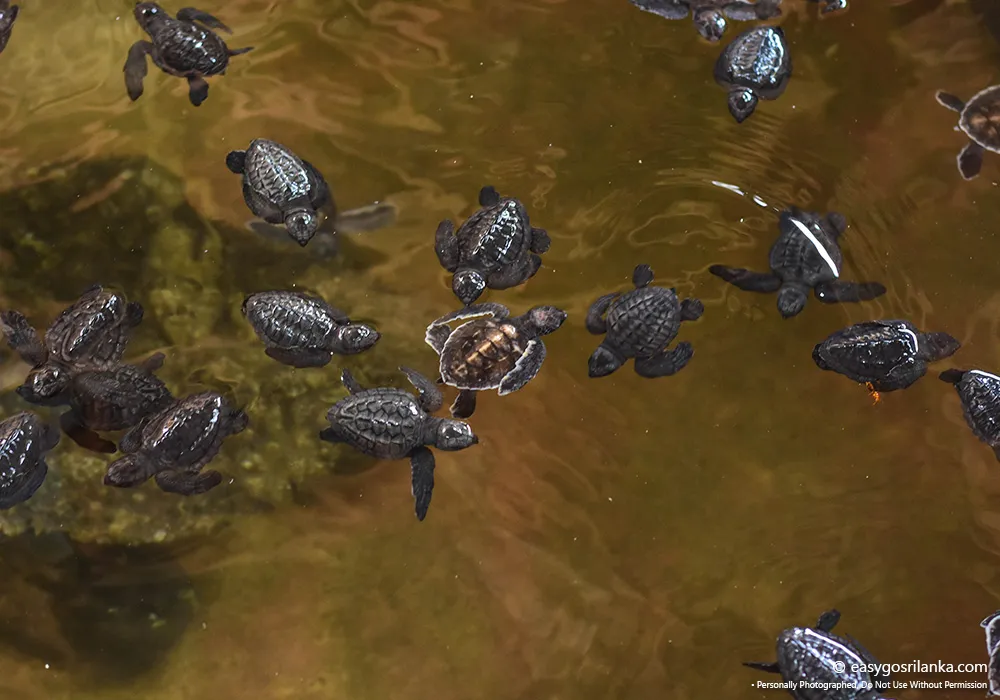
Sea turtle nesting does not follow a simple single-season calendar across the entire Sri Lankan coastline. Nesting activity varies by species, location, weather, and local beach conditions.
For this reason, travelers should not plan a visit solely around the expectation of seeing nesting turtles or hatchlings.
What to Expect
A typical turtle conservation visit begins with an introduction to the sea turtles found around Sri Lanka and the conservation challenges they face.
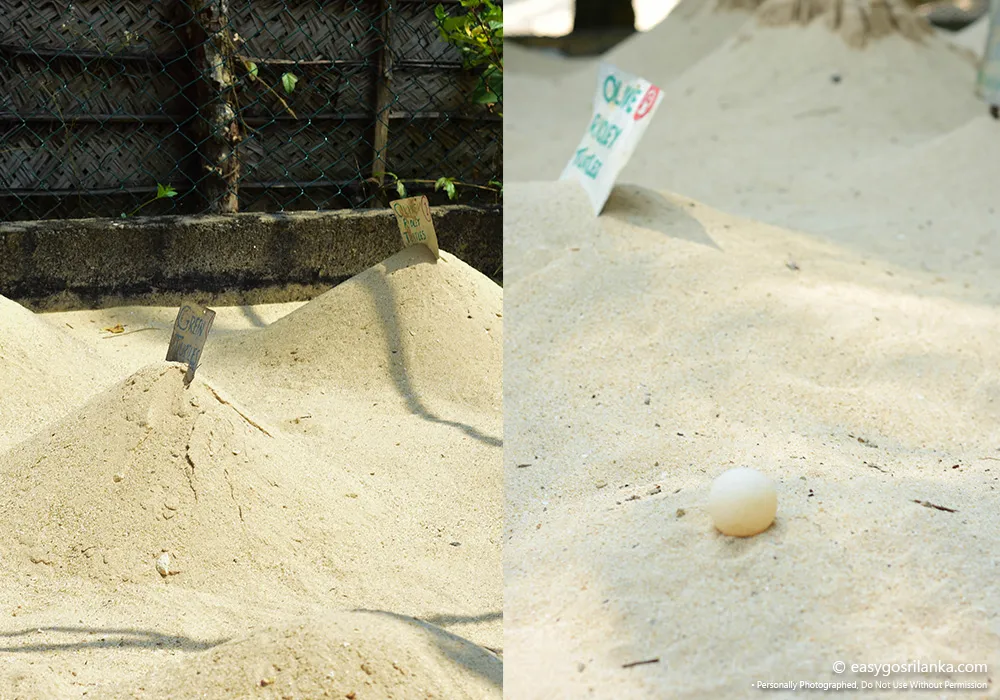
Depending on the facility, you may learn about turtle eggs, nesting beaches, hatchlings, injured turtles, rehabilitation, and marine conservation.
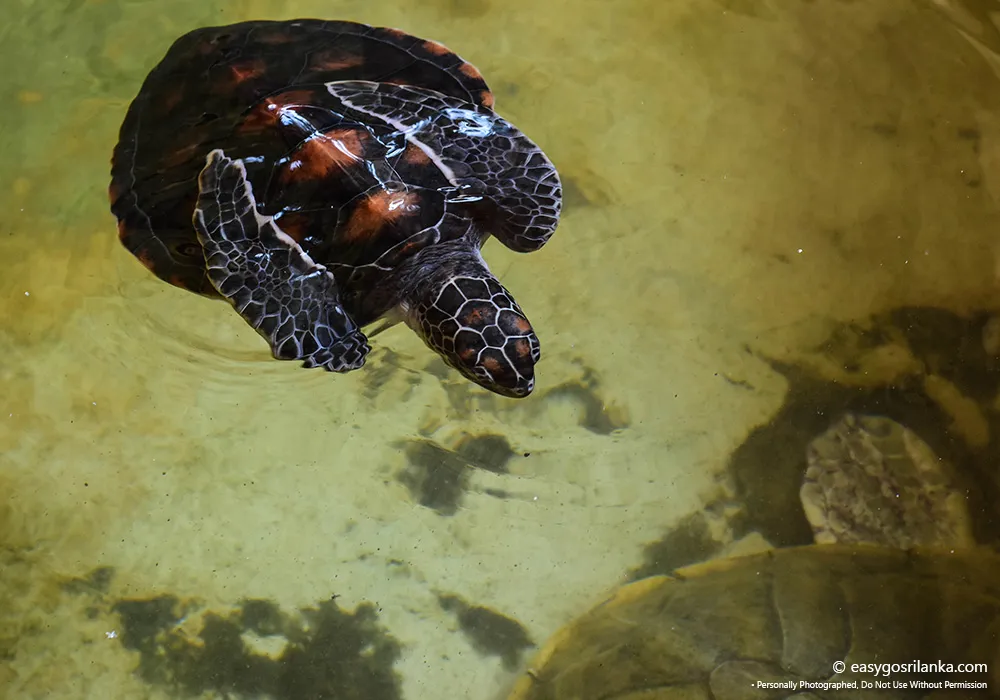
Some centers maintain tanks or rehabilitation areas where rescued turtles can be observed. However, the quality and conservation practices of facilities can vary considerably.
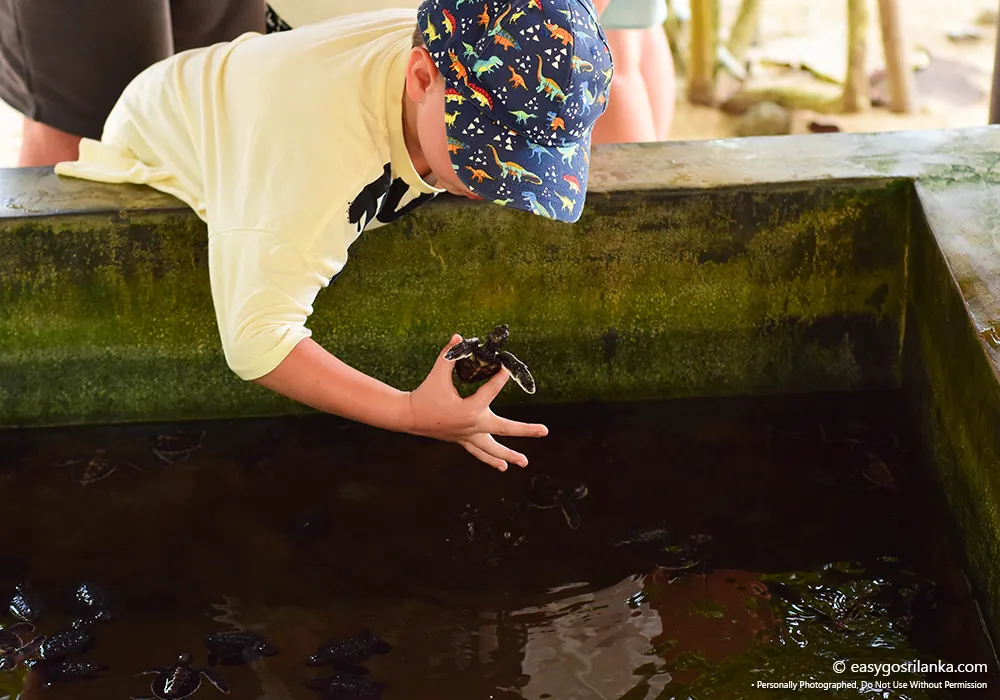
Responsible facilities should prioritize animal welfare and conservation rather than encouraging unnecessary handling or interaction.
Visitors may also learn about threats such as plastic pollution, fishing equipment, habitat destruction, artificial lighting on nesting beaches, and disturbance caused by human activity.
The experience is generally educational and relatively short, making it easy to include in a coastal Sri Lanka itinerary.
Difficulty & Suitability
Difficulty: Easy
No physical fitness or previous wildlife experience is required.
Suitable For
- Families with children
- Couples
- Solo travelers
- Senior travelers
- Nature lovers
- Wildlife enthusiasts
- Students
- Photographers
- First-time visitors to Sri Lanka
The experience can be particularly valuable for children because it combines wildlife observation with environmental education.
What to Bring
- Comfortable clothing
- Hat or cap
- Sunscreen
- Drinking water
- Camera or smartphone
- Small backpack
- Insect repellent
- Reusable water bottle
If visiting a beach or coastal area afterward, bring appropriate swimwear and beach essentials.
Travel Tips
- Follow the instructions provided by the conservation center.
- Do not touch turtles unless specifically permitted by trained staff.
- Never pick up or chase hatchlings.
- Do not use flash photography if it may disturb animals.
- Avoid loud noises around wildlife.
- Never feed turtles unless instructed by authorized staff.
- Do not enter restricted rehabilitation areas.
- Keep plastic and other waste away from beaches.
- Respect nesting turtles and maintain a safe distance.
- Choose conservation centers that demonstrate responsible animal-welfare practices.
Responsible Turtle Tour
Choosing the right conservation center is an important part of this experience.
Not every place marketed as a “turtle hatchery” or “turtle conservation center” follows the same standards. Travelers should look for organizations that clearly explain their conservation work and prioritize animal welfare.
Look for:
- Educational programs about sea turtle conservation
- Proper rehabilitation facilities
- Professional animal care
- Limited or no unnecessary handling
- Appropriate enclosures and clean water
- Clear conservation objectives
- Protection of natural nesting habitats
- Responsible hatchling release practices
Avoid Experiences That:
- Encourage visitors to handle turtles unnecessarily
- Allow excessive touching or holding of animals
- Keep healthy turtles permanently in small tanks for entertainment
- Promote wildlife interaction as the main attraction
- Encourage visitors to hold hatchlings for photographs
A responsible visit should leave you with a better understanding of sea turtle conservation—not simply a photograph of yourself holding a turtle.
Travel Tips
- Research the conservation center before visiting.
- Ask how entrance fees support conservation activities.
- Choose organizations with transparent conservation practices.
- Do not expect guaranteed turtle sightings.
- Combine the visit with other southern coastal attractions.
- Avoid buying souvenirs made from turtle shells or other wildlife products.
- Carry a reusable water bottle to reduce plastic waste.
- Follow local beach and wildlife guidelines.
- If visiting a nesting beach at night, use only permitted lighting and follow conservation instructions.
Related Destinations
Explore more destinations along Sri Lanka’s southern and southwestern coast:
Related Activities
Discover more wildlife, nature, and coastal experiences:
- Whale Watching
- Dolphin Watching
- Bird Watching
- Lagoon Tours
- Rainforest Walks
- Surfing
- Snorkeling
- Scuba Diving
- Kayaking
- Beach Relaxation
- Scenic Photography Tours
Frequently Asked Questions (FAQ)
You can learn about Sri Lanka’s sea turtle species, their life cycles, nesting behavior, conservation challenges, rehabilitation, and the importance of protecting marine habitats.
Five species of marine turtles are recorded nesting around Sri Lanka: the green turtle, olive ridley, hawksbill, loggerhead, and leatherback.
You may see hatchlings at some conservation facilities or during authorized conservation activities, but sightings are not guaranteed.
Responsible wildlife experiences generally discourage unnecessary handling. Follow the instructions of trained conservation staff and avoid touching turtles unless specifically authorized.
Yes. It is an educational and relatively easy activity that can be particularly enjoyable for families with children.
Sea turtles can be encountered around Sri Lanka throughout the year, but nesting and hatchling activity varies by location and species. There is no single guaranteed turtle season for the entire island.
The southwestern and southern coasts, including areas around Kosgoda, Bentota, Hikkaduwa, and other coastal communities, offer turtle conservation experiences. Always check the current practices of the specific organization before visiting.
It can be, provided the organization genuinely prioritizes conservation and animal welfare. Visitors should avoid facilities that encourage unnecessary handling or keep animals primarily for entertainment.
Book This Experience
Discover Sri Lanka’s Sea Turtle Conservation
Learn about Sri Lanka’s remarkable marine turtles and the efforts being made to protect them. A responsible turtle conservation visit offers an educational experience while helping you understand the importance of protecting the island’s beaches, oceans, and wildlife.
Plan your Sri Lanka coastal adventure with Easy Go Sri Lanka and include a meaningful turtle conservation experience in your itinerary.